Chimney Cap Installation in Bettendorf
Chimney cap installation in Bettendorf, IA. Keep out rain, animals, and sparks with a properly sized stainless steel cap. Call (563) 356-0061.
A chimney cap is a small piece of hardware that does a lot of work. It keeps rain out of the flue, keeps animals and birds from nesting inside, blocks falling debris, and catches sparks before they leave the chimney. For the cost and the protection, it's one of the smartest upgrades a homeowner can make. Professional chimney cap installation in Bettendorf keeps your flue protected year-round.
Many Bettendorf chimneys — especially older masonry stacks on riverfront homes — have no cap at all, or a rusted-out one that stopped working years ago. Replacing it is straightforward, and it pays for itself in prevented damage.
One Small Upgrade That Protects the Whole Chimney
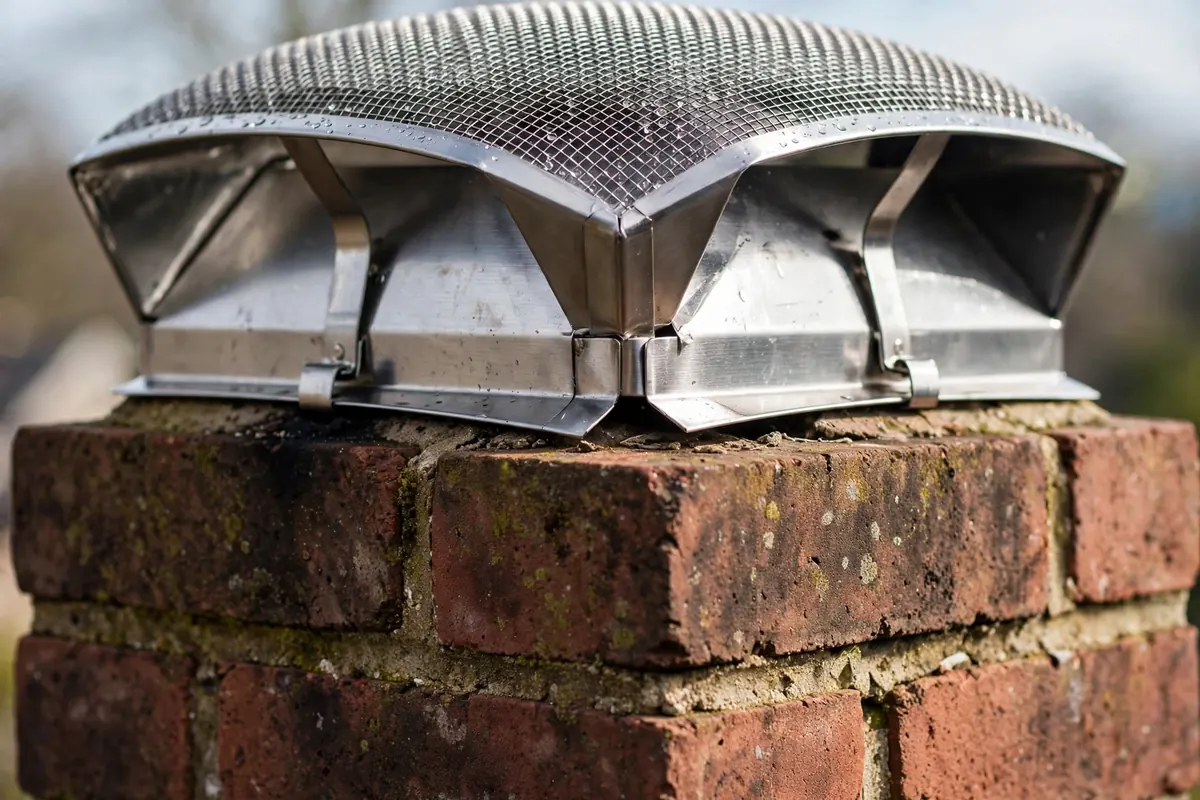
A chimney cap sits on top of the flue and covers the opening with a protective lid, usually with a mesh screen around the sides. The mesh keeps out animals and large debris while letting smoke and gases escape freely. The lid deflects rain away from the flue interior.
Without a cap, rain falls straight down the flue. That water soaks the flue liner, the smoke shelf, and the firebox. Over time it cracks clay liners, rusts dampers, and eats away at mortar from the inside. In an Iowa winter, that trapped moisture freezes and expands — the same freeze-thaw cycle that destroys masonry outside, happening inside your chimney too.
Birds and squirrels find open chimneys irresistible. A nesting animal blocks the flue, and a blocked flue pushes smoke and carbon monoxide into the house. The cap's mesh screen stops them cold. It also stops sparks and embers from drifting out of the flue and onto the roof or nearby trees.
No cap, or a rusted one? Call (563) 356-0061 — we'll check yours and get the right cap fitted.
Why So Many Bettendorf Chimneys Need One Now
Mississippi river humidity and regular rain mean Bettendorf flues take on more moisture than chimneys in drier parts of the state. An uncapped flue in this climate collects water all year, and the freeze-thaw cycling of an Iowa winter turns that moisture into cracked liners and spalled brick.
Storm debris is another factor. Wind off the river carries leaves, twigs, and small branches. Without a cap, all of it drops into the flue and builds up on the smoke shelf. That debris restricts draft and becomes fuel if a spark reaches it.
Older homes around State Street and the downtown Bettendorf area were often built without caps, or with caps that have rusted through. If you can see straight down your flue from the roof, you have no protection at all. That was normal decades ago; today it's a known cause of preventable chimney damage.
If your chimney has no cap — or the old one rusted through years ago — call (563) 356-0061. We'll check it and get the right one fitted.
Stainless Steel vs. Galvanized
There are two common materials, and the difference matters:
- Stainless steel — Resists rust and corrosion for years. Costs more up front, lasts much longer. This is what we recommend for most Bettendorf homes, especially with the river humidity.
- Galvanized steel — A steel cap with a zinc coating. Cheaper, but the coating wears down and rust follows, usually within a few years in a wet climate.
A rusted cap is worse than it looks. Rust flakes fall into the flue. The mesh deteriorates and stops screening out animals. Once a galvanized cap starts rusting, replacement is a matter of time, not if. Stainless steel avoids that cycle entirely.
We install stainless steel caps built for Iowa winters. Call (563) 356-0061 for a straight answer on what your flue needs.
How Installation Works
A proper cap is sized to the flue — not guessed at, not "close enough." Here's the process:
- Flue measurement. The flue opening gets measured precisely. Single-flue and multi-flue chimneys take different cap styles.
- Cap selection. The right style is chosen for the flue type and size. Some chimneys do better with a single-flue cap per flue; others with one multi-flue top-mount cap covering the whole crown.
- Fit check. The cap is test-fit to confirm it sits level and seals against the flue or crown.
- Secure mounting. The cap is mounted with the correct fasteners for the masonry or flue type. It needs to stay put in high winds but remain removable for future sweeping and inspection.
- Height check. The installation confirms the chimney still meets the 3-2-10 rule — 3 feet above the roof penetration, 2 feet above anything within 10 feet — since a cap doesn't change that requirement.
Most cap installations are done in a single visit. Call (563) 356-0061 to get yours scheduled.
Signs You Need a New Cap (or Your First One)
- No cap at all — you can see open flue from the roof
- Rust streaks running down the outside of the chimney
- A cap that wobbles, tilts, or has visible holes in the mesh
- Bird or squirrel sounds inside the chimney
- Water stains on the firebox walls or the ceiling near the chimney
- The damper rusted shut or covered in corrosion
Spot your chimney on that list? Call (563) 356-0061 — a cap is a quick fix that prevents expensive damage.
Frequently Asked Questions
What does a chimney cap actually do?
It sits on top of the flue and does four jobs: keeps rain out, keeps animals and birds out, blocks leaves and debris, and reduces downdrafts that push smoke back into the room. It's a simple metal cover with mesh sides, and it's one of the highest-value upgrades a chimney can get.
How do I know if I need a new chimney cap?
If there's no cap at all, if the existing one is rusted through, bent, or missing its mesh, or if you've had animals or water coming down the flue. A quick look from the ground with binoculars — or from the roof during an inspection — tells the story.
Will a cap keep raccoons and birds out of my chimney?
Yes, as long as it has intact mesh screening on the sides. Open flues are an open invitation — raccoons, squirrels, and chimney swifts all move in. The mesh lets smoke out while keeping everything else from getting in.
Does a chimney cap affect how my fireplace drafts?
A properly sized cap doesn't restrict draft. Problems only come from caps that are undersized or clogged with creosote, which is another reason the annual sweeping matters — we check the cap while we're up there.
What are caps made of?
Stainless steel lasts longest and resists rust; galvanized steel is cheaper but rusts over time; copper looks great on historic homes but costs more. We'll recommend what fits your chimney and budget.
Get Your Chimney Capped
Rain, animals, debris, and sparks — a cap blocks all four, and it costs far less than the repairs an open flue invites. If your Bettendorf chimney has no cap or a rusted one, now is the time. Call (563) 356-0061 for chimney cap installation in Bettendorf, Iowa and the Quad Cities area. We'll measure your flue, recommend the right cap, and install it right the first time.
Need a chimney sweep in Bettendorf?
Book your annual chimney sweeping or inspection with ChimneyCare today.