Chimney Liner Installation in Bettendorf
Chimney liner installation in Bettendorf, IA. Replace cracked clay liners with stainless steel, done to NFPA 211. Call (563) 356-0061.
The liner is the part of the chimney that takes the beating. Hot gases, creosote, and corrosive byproducts pass through it every time you burn a fire. When the liner cracks, deteriorates, or was never the right size to begin with, heat and gases reach the masonry and the house framing. Chimney liner installation in Bettendorf replaces a failed or missing liner with one that protects your home properly.
A cracked clay tile liner is the most common liner problem in older Bettendorf homes. The fix is usually a stainless steel reline — a new liner dropped into the existing chimney, sized correctly for the appliance it serves.
Your Flue Liner Is the Part That Keeps You Safe
A liner is the inner channel of the chimney — the part the smoke actually travels through. It does three jobs:
- Protects the masonry from heat and corrosive combustion byproducts. Without a liner, those attack the brick and mortar directly.
- Protects the house by containing heat and gases inside the flue instead of letting them leak into surrounding framing and walls.
- Sizes the flue correctly for the appliance. Too large a flue and the draft goes sluggish; too small and smoke backs up. The right size gives clean, safe drafting.
NFPA 211 calls for a chimney to have a liner, and for that liner to be in sound condition. An unlined chimney or a cracked liner isn't just inefficient — it's a fire and carbon monoxide risk.
Worried about your liner? Call (563) 356-0061 — an inspection will tell us exactly where it stands.
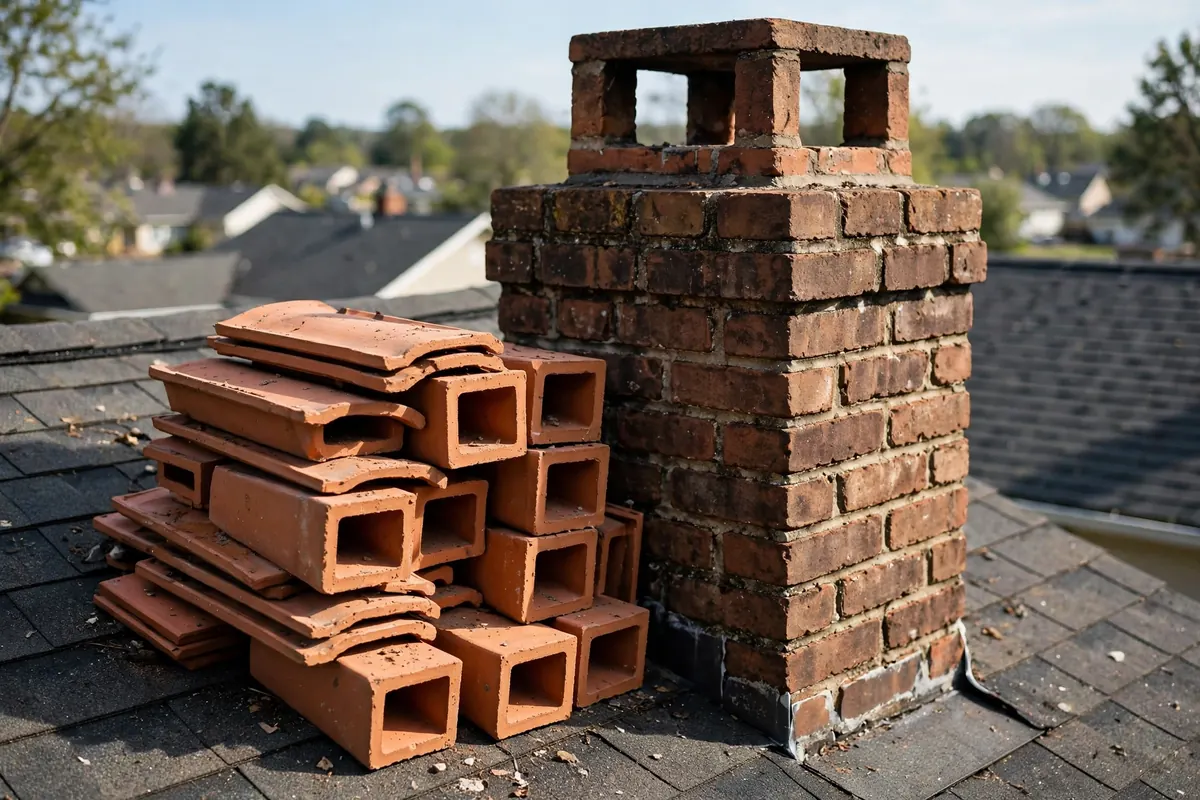
Clay Tile Liners vs. Stainless Steel Relines
Most older masonry chimneys in Bettendorf were built with clay tile liners — square or rectangular terracotta sections stacked inside the brickwork. They were standard for decades and work fine until they crack. And they crack: thermal stress, chimney fires, freeze-thaw cycles, and simple age all split clay tiles. A cracked tile lets heat and gases escape into the masonry, and the cracks only grow.
A stainless steel reline is the standard modern repair. A stainless steel liner — rigid or flexible, depending on the flue — is installed inside the existing chimney. Stainless steel resists corrosion, handles the thermal cycling, and comes with the insulation needed for proper draft and safety. It turns a chimney with a failed clay liner into a chimney that meets current standards.
Other liner types exist (cast-in-place, heat-shield systems), but for a cracked clay liner in a residential masonry chimney, a stainless steel reline is the most common and most reliable answer. We'll tell you during inspection which option fits your chimney.
The only way to know your liner's condition is a video inspection. Call (563) 356-0061 and we'll show you exactly what your flue looks like inside.
Why Older Bettendorf Chimneys Need Relining
Bettendorf's older housing stock — especially the mid-century and older homes around downtown and the riverfront — has original clay tile liners. Those tiles have been through decades of Iowa winters: heating up with every fire, freezing when the chimney sits cold, expanding and contracting year after year. Cracks are the expected outcome, not the exception.
A Level 2 inspection with a video scan is how cracked liners get found. The damage is inside the flue, invisible from the hearth and the roof. Homebuyers in Bettendorf get these inspections before closing precisely because a cracked liner is a common and expensive surprise.
There's also the sizing problem. Many old chimneys were built with oversized flues — big square clay tiles serving a small fireplace or a modern insert. An oversized flue drafts poorly: smoke lingers, creosote builds faster, and cold air sinks back down. A properly sized stainless steel liner fixes the sizing problem at the same time it fixes the damage.
If your home was built before the 1980s and the liner's never been checked, now's the time. Call (563) 356-0061 to schedule a Level 2 inspection.
Signs Your Liner Needs Replacement
- A Level 2 video inspection shows cracked, broken, or missing flue tiles
- You had a chimney fire — even a small one damages liners
- Smoke spills into the room or the fireplace drafts poorly despite a clean flue
- Pieces of clay tile falling into the firebox or onto the smoke shelf
- Water damage or staining on the exterior masonry near the flue line
- You're installing a new insert or stove and the old flue is the wrong size
A cracked liner won't fix itself — and it won't wait for a convenient time to fail. Call (563) 356-0061 today.
How Liner Installation Works
- Inspection and measurement. A Level 2 inspection with a video scan documents the liner's condition. The flue is measured precisely, and the appliance it serves determines the correct liner size.
- Liner selection. Rigid stainless steel for straight flues, flexible stainless steel for offsets. Insulation is specified — an insulated liner drafts better and meets clearance requirements.
- Preparation. The old flue is cleaned. Any blockages are cleared. The damper area is prepared for the liner's passage.
- Installation. The new liner is lowered into the flue from the top, connected at the bottom to the appliance or firebox, and sealed at the top with a proper termination and cap plate.
- Insulation. The space between the liner and the old flue is insulated as specified, which improves draft and keeps flue gas temperatures where they belong.
- Final check. The installation is inspected to confirm the liner is continuous, properly connected, and sized right. The 3-2-10 rule still applies — the chimney termination must be 3 feet above the roof penetration and 2 feet above anything within 10 feet. If the chimney was already short, the liner install is the time to address it.
Ready to reline? Call (563) 356-0061 and we'll walk you through the options for your chimney.
Frequently Asked Questions
What does a chimney liner do?
It protects the masonry from heat and corrosive creosote, gives smoke a smooth path up and out, and keeps carbon monoxide and sparks contained. An unlined or damaged-liner chimney lets heat and gases reach the brick and the house framing — that's the core safety issue relining fixes.
What kinds of chimney liners are there?
Clay tile liners are what older masonry chimneys were built with — durable until they crack. Stainless steel liners are the modern reline choice: they drop inside the existing flue, handle all fuel types, and carry long warranties from the manufacturer.
How do I know if my liner needs replacing?
A video scan during a Level 2 inspection shows cracked, missing, or shifted clay tiles — the most common finding in mid-century Bettendorf homes. Heavy glazed creosote that won't brush off is another sign the liner surface has failed.
Do you have to tear down the chimney to install a liner?
No. A stainless steel liner feeds down through the existing flue from the top, then gets insulated and connected at the fireplace. The masonry stays intact — it's a reline, not a rebuild, and most homes are done in a day.
How long does a stainless steel liner last?
Decades — stainless liners are built for the long haul and manufacturers back them with long warranties. The exact terms vary by manufacturer and fuel type, which we'll go over before you decide.
Get Your Liner Assessed
A cracked liner is a hidden hazard — heat and gases escaping where they shouldn't. If your Bettendorf chimney has an original clay liner, a video inspection is the only way to know its condition. Call (563) 356-0061 for chimney liner installation in Bettendorf, Iowa and the Quad Cities area. We'll scan your flue, show you what we find, and install the right liner if you need one — done to NFPA 211 standards.
Need a chimney sweep in Bettendorf?
Book your annual chimney sweeping or inspection with ChimneyCare today.